Paving & Pathways08 Apr 20267 min read
Best Pavers for Sydney 2026: Concrete, Stone, Travertine, or Porcelain
Compare the most popular paver types for Sydney homes. Concrete, sandstone, bluestone, travertine, and porcelain pavers with the strengths, costs, and best uses of each.
Key Takeaways
What this guide covers
- 01Concrete pavers offer the best value for general entertaining areas and paths.
- 02Natural stone like sandstone and bluestone suits character homes and feature areas but costs more.
- 03Porcelain pavers stay cool, resist staining, and suit modern homes and pool surrounds.
The best paver for a Sydney project depends on where it's going, how it'll be used, the look you want, and the budget. Concrete pavers offer the best value for general entertaining areas and paths. Sandstone suits heritage homes and feature areas. Bluestone and porcelain suit contemporary architecture. Travertine is the dominant choice around pools. The wrong paver in the wrong location stains, fades, gets slippery, or simply looks wrong against the home. This guide compares the most common paver types used across Sydney, with the strengths, weaknesses, and best uses for each.
Concrete pavers — the Sydney workhorse
Concrete pavers are the most-installed paver type in Sydney for good reason: they cover the widest range of uses, sizes, colours, and finishes at the most accessible price point.
How they're made: Cast concrete with mineral pigment, often surface-textured to mimic stone. Modern Sydney concrete pavers are technically sophisticated — large-format, low-porosity, with realistic stone finishes that aren't easily distinguishable from natural stone in many applications.
Strengths:
- Wide range of sizes (300×300 up to 800×400)
- Many colours and finishes (smooth, textured, sandblasted, exposed aggregate)
- Strong and consistent — manufactured to tight tolerances
- Cost-effective ($80–$180 per square metre installed)
- Widely available — short lead times
- Suits most modern homes
Weaknesses:
- Less character than natural stone (matters more on character homes)
- Can fade over 10–15 years (premium concrete pavers fade less)
- Not the same depth or weight as natural stone
Best for:
- General patio and entertaining areas
- Paths around the home
- Driveways (vehicle-rated grade)
- Modern and contemporary architecture
- Budget-sensitive projects where appearance still matters
Avoid for:
- Heritage homes where natural stone fits better
- Pool surrounds where heat and look matter more (travertine and porcelain are better)
Sandstone — the Sydney classic
Sandstone is the most genuinely "Sydney" paver. It's the material the city was built from, and it suits everything from Federation cottages to contemporary architecture when used well.
How it's quarried: Hand-cut from local Sydney sandstone deposits. Available in natural cleft (rough natural surface), sawn (clean cut, smoother), or dressed (machine-finished surfaces).
Strengths:
- Beautiful natural finish — improves with age
- Suits Sydney heritage architecture (Federation, Victorian, Inter-war)
- Range of golden, honey, and grey-cream tones
- Effectively unlimited lifespan
- Slip-resistant when textured
Weaknesses:
- More expensive than concrete ($180–$380 per square metre installed)
- Porous — needs sealing every 3–5 years
- Stains from oil and red wine if unsealed
- Heavier than concrete pavers (more demanding install)
- Finite local supply — long lead times for large jobs
Best for:
- Heritage homes
- Front yards and entry paths in established suburbs (Mosman, Killara, Hunters Hill)
- Pool surrounds with character
- Garden features and walls (matching paving)
- Premium project briefs
Avoid for:
- Heavy-vehicle areas (some grades aren't strong enough)
- Stark contemporary aesthetics where the natural variation reads as inconsistency
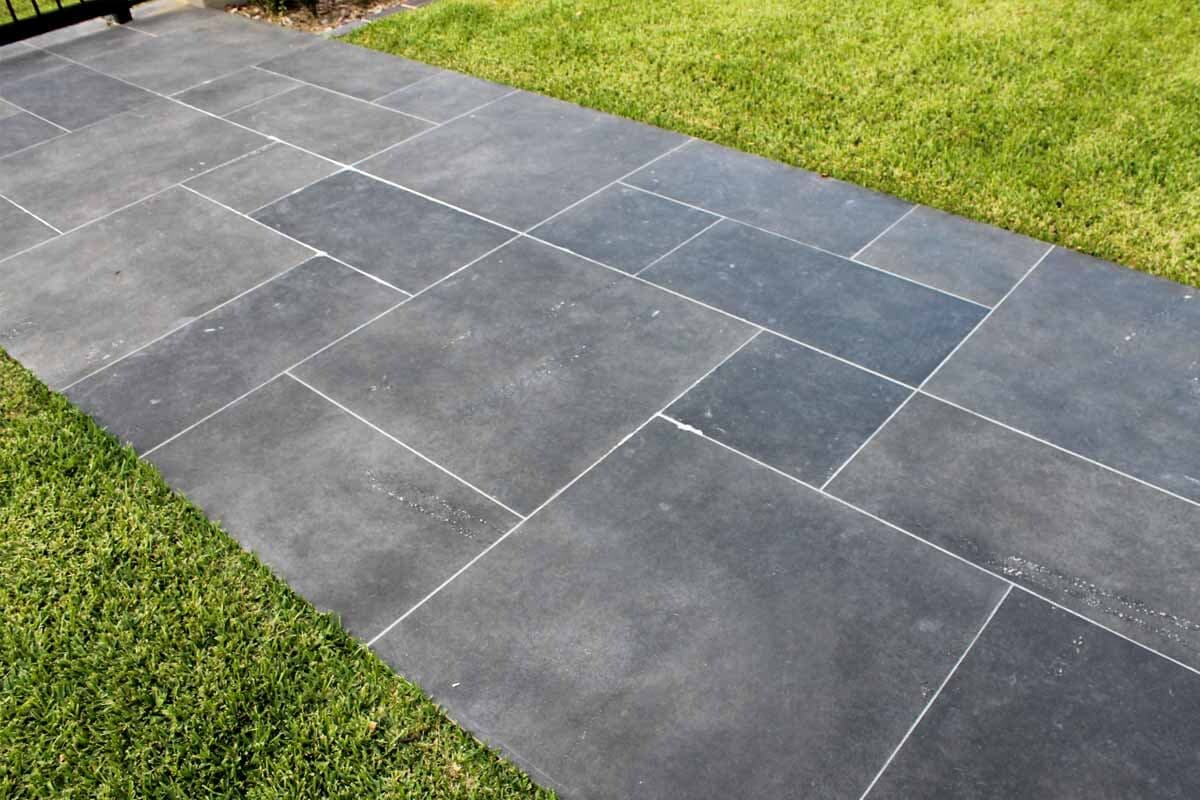
Bluestone — contemporary, premium
Bluestone is the go-to paver for contemporary Sydney homes wanting a premium dark stone finish.
How it's quarried: Basalt rock cut into pavers. Most Australian bluestone comes from Victoria. Available sawn (smooth), sandblasted (textured), or natural cleft (rough).
Strengths:
- Dense, low-porosity (less prone to staining than sandstone)
- Strong contemporary aesthetic
- Cool dark tones suit modern architecture
- Hard-wearing
- Suits Mediterranean and Japanese-inspired designs
Weaknesses:
- Heat-absorbing — gets very hot in direct summer sun (bad for poolside in hot positions)
- More expensive than concrete ($200–$380 per square metre installed)
- The dark surface shows everything (leaf debris, water marks, dust)
- Can show "salt bloom" (white efflorescence) for the first few months
Best for:
- Contemporary architecture
- North-facing or shaded entertaining areas (avoids the heat issue)
- Premium driveways
- Feature pool surrounds (where heat is acceptable, like east-facing pools)
- Architectural projects with strong dark palette
Avoid for:
- West-facing pool surrounds (gets uncomfortably hot)
- Heritage homes (clashes with character)
- Areas where dust and debris will show constantly
Travertine — the Sydney pool surround standard
Travertine has become the dominant pool paver in Sydney over the past decade, and for good reason: it stays cool underfoot, looks naturally beautiful, and ages well.
How it's quarried: Natural sedimentary rock from Turkey, Iran, or Italy. Available filled (holes filled with cement) or unfilled (natural holes left), and honed (smooth) or tumbled (textured).
Strengths:
- Stays significantly cooler underfoot than darker pavers
- Natural slip resistance (when textured)
- Beautiful warm tone (cream, beige, walnut)
- Ages well — gains character over time
- Good for pool surrounds and entertaining areas
Weaknesses:
- Porous — needs sealing every 3–5 years
- Can stain from chlorine spray, sunscreen, oil
- Some grades have natural holes that catch debris
- Quality varies significantly by source — premium grades are very different from budget
- $180–$320 per square metre installed
Best for:
- Pool surrounds (the dominant choice)
- Mediterranean-style entertaining areas
- Front entry paths on Mediterranean or contemporary homes
- Warm-toned palettes
Avoid for:
- Vehicle areas (most travertine isn't rated for driveways)
- Heritage homes where stone style needs to match the period
- Cold-tone modern palettes (clashes with grey palettes)
Porcelain pavers — modern, premium, low maintenance
Large-format porcelain pavers are the modern luxury paver. Perfect for contemporary architecture and increasingly the choice for premium pool surrounds.
How they're made: High-fired porcelain ceramic, designed for outdoor use. Available in formats from 600×600 up to 1500×750. Many finishes — stone-look, concrete-look, timber-look.
Strengths:
- Virtually zero maintenance — non-porous, no sealing required
- Won't stain, fade, or weather
- Stays cool underfoot (similar to travertine)
- Slip-resistant grades available (R11, R12)
- Large formats for clean contemporary look
- Suit modern architecture exceptionally well
- Wide range of looks (stone, concrete, timber)
Weaknesses:
- Highest installed cost ($220–$400+ per square metre)
- Limited local stock — most porcelain is imported
- Specialist install (large-format pavers require precise base preparation)
- Can chip on edges if struck hard
- Some homeowners find them "too perfect" without natural variation
Best for:
- Premium contemporary homes
- Pool surrounds where appearance and low maintenance both matter
- Large entertaining areas
- Outdoor kitchens and barbecue zones (no staining)
- Modern architecture with clean lines
Avoid for:
- Heritage homes (the precision look clashes)
- Budget-sensitive projects
- Areas where natural variation is wanted
Brick pavers — character, traditional
Clay brick pavers suit Federation and Victorian homes with traditional character.
Strengths:
- Warm character finish
- Suits heritage architecture
- Range of colours (red, brown, charcoal, sandstone)
- Cost-effective ($90–$220 per square metre installed)
- Long lifespan
Weaknesses:
- Smaller format means more joints (more cleaning, more grout to maintain)
- Can show efflorescence (white salt deposits) early
- Less suited to contemporary architecture
Best for:
- Federation and Victorian homes
- Garden paths and edging
- Outdoor wood-fired pizza ovens and BBQs (heat-tolerant)
- Heritage feature areas
Avoid for:
- Pool surrounds (better materials available)
- Contemporary architecture
- Driveways with heavy vehicle loads
Less common paver options
Limestone
Beautiful Mediterranean stone but high-maintenance:
- Stains badly
- Etches with acid (common cleaning products)
- Best in dry, low-traffic feature areas
- $200–$350 per square metre installed
Granite
Premium hard stone, very durable but expensive:
- Excellent for high-traffic feature areas
- Many colours (grey, pink, black, gold)
- Slip-resistant when flamed-finished
- $250–$500+ per square metre installed
Basalt cobblestones
Traditional European cobblestone look for driveways and feature areas:
- Distinctive aesthetic
- Very durable
- Specialist install
- $300–$500+ per square metre installed
Reconstituted stone
Concrete pavers manufactured to look like specific natural stones:
- Cost-effective alternative to natural stone
- Increasingly convincing finishes
- Cheaper to replace than natural equivalents
- $100–$220 per square metre installed
How to pick the right paver for a Sydney project
Five questions usually settle the choice:
1. Where is the paving going?
- Pool surround → travertine, porcelain, or sandstone
- Driveway → concrete pavers (vehicle-rated) or large-format basalt
- Entertaining patio → concrete pavers, travertine, sandstone, or bluestone
- Front entry path → sandstone, porcelain, or premium concrete pavers
- Garden path → brick, concrete pavers, or natural sandstone
2. What does the architecture want?
- Heritage Federation/Victorian → sandstone or brick
- Mid-century modern → concrete pavers or limestone
- Contemporary → bluestone, porcelain, or large-format concrete
- Mediterranean → travertine or limestone
- Coastal/beach → travertine or concrete
- Hamptons → painted brick edging or large-format concrete
3. What's the sun exposure?
- Full west sun → avoid bluestone (too hot), choose travertine or porcelain
- Mostly shaded → avoid limestone (mould risk), most options work
- Mixed → most options work
4. What's the budget?
- Budget: concrete pavers
- Mid-range: brick, mid-grade travertine, basic sandstone
- Premium: high-grade sandstone, bluestone, premium porcelain, granite
5. How much maintenance are you willing to do?
- Zero maintenance: porcelain
- Low (annual cleaning): concrete pavers, bluestone
- Moderate (sealing every 3–5 years): sandstone, travertine, brick
- High: limestone
Where to start
If you're choosing pavers for a Sydney project, the most useful first step is a free site visit and conversation about the use, the architecture, the exposure, and the budget. Nazscapes will recommend the right paver for the situation, talk through finish options, and put together a written quote covering supply and proper install.

Nazscapes
Ryde-based Sydney landscaping team
Nazscapes is a Sydney landscaping company delivering design-led outdoor construction for homes that need more than surface-level garden styling. Since 2002, the team has combined planting, paving, turf, retaining, pool surrounds, and site-aware detailing into landscapes built for long-term liveability.