Retaining Walls08 Apr 20266 min read
Retaining Wall Materials Sydney: Sandstone, Timber, Block, or Stone
Compare retaining wall materials for Sydney homes. Sandstone, timber, concrete block, and natural stone with the strengths, costs, and best uses of each.
Key Takeaways
What this guide covers
- 01The right retaining wall material depends on wall height, load, budget, and how the wall needs to look.
- 02Treated timber is the cheapest option for walls under 1 metre. Concrete block and sandstone are the standard for higher walls.
- 03Sandstone and natural stone cost more upfront but last decades and add significant character to a Sydney garden.
A retaining wall is long-term infrastructure. The material you choose affects how the wall looks, how long it lasts, how much it costs to build, and how it integrates with the rest of the landscape. The wrong material in the wrong situation leads to a wall that fails early, looks out of place, or costs significantly more than it needed to. This guide covers the most common retaining wall materials used across Sydney, the strengths and weaknesses of each, and which suits which situation.
Treated timber sleepers
The most affordable retaining wall material for low residential walls.
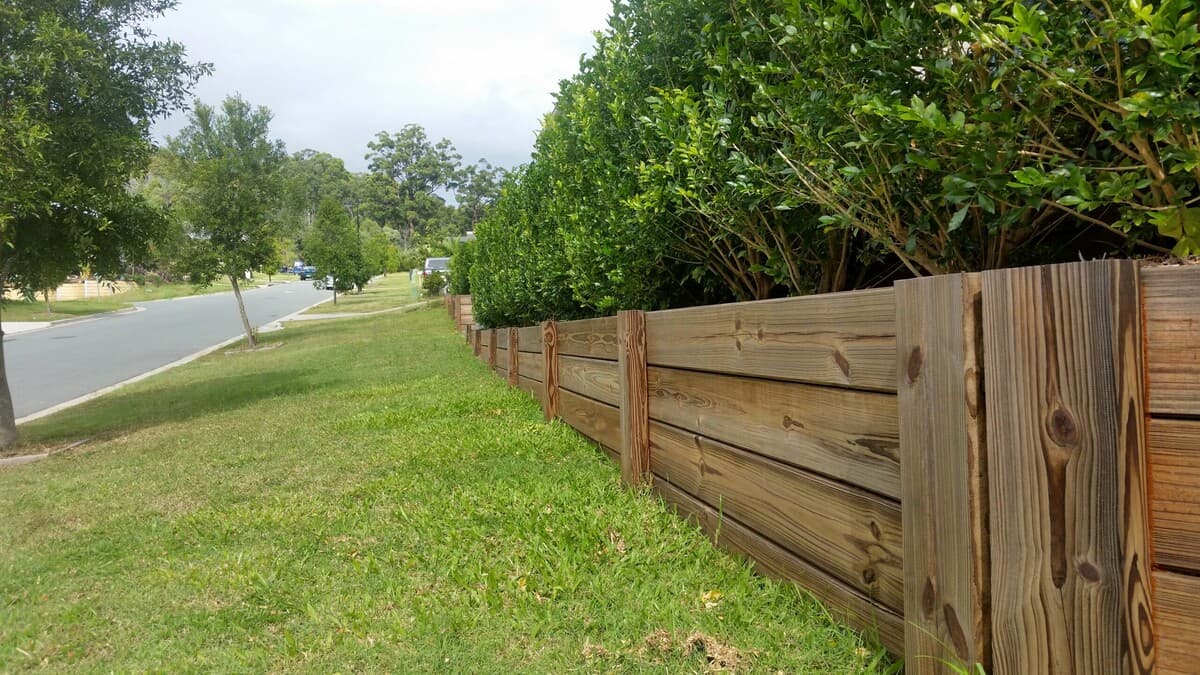
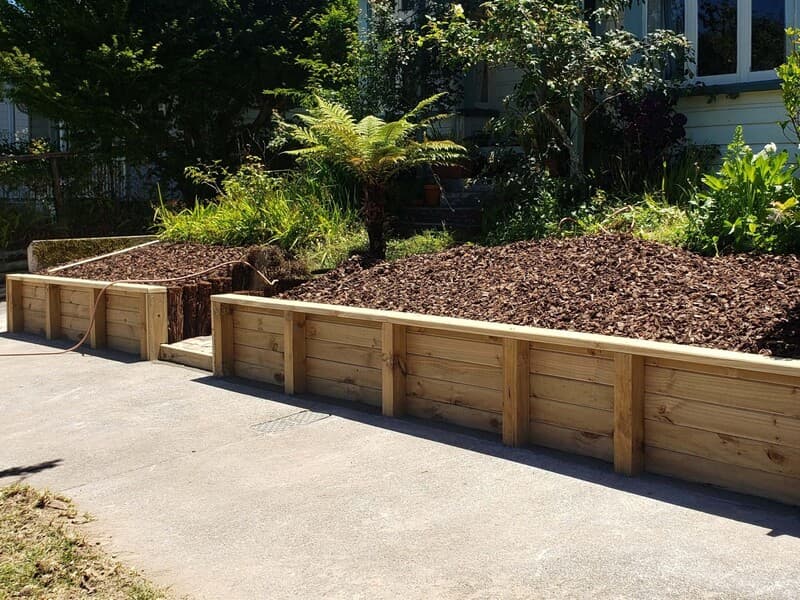
How it's built: Hardwood sleepers (typically 200mm × 75mm) stacked horizontally between galvanised steel H-posts set in concrete-filled post holes. Sleepers are typically pressure-treated to H4 grade for ground contact.
Best for:
- Garden-scale retaining (under 800mm)
- Defining garden beds and lawn edges
- Terraced planting on gentle slopes
- Budget projects on rear boundaries
- Informal, natural aesthetic
Strengths:
- Lowest installed cost ($300–$500 per linear metre under 800mm)
- Quick to build
- Easy to integrate with planting
- Suits informal and native garden styles
Weaknesses:
- Lifespan typically 15–20 years before sleepers degrade
- Limited height (rarely above 1.2m without significant engineering)
- Can warp or twist over time
- Requires drainage detail behind to prevent rot
- Not suitable for structural applications under buildings
Avoid for:
- Walls above 1.2m
- Front-of-house feature walls (better materials available)
- Boundary walls with neighbour load
- Walls below paths, driveways, or buildings
Concrete block walls
The Sydney workhorse for mid-to-high residential retaining walls.
How it's built: Concrete masonry blocks (200mm or 300mm wide) laid in courses, vertical reinforcing steel through the cores, cores filled with structural concrete, footing engineered for load. Finished with render, paint, capping, or stone cladding.
Best for:
- Walls 600mm–2m
- Driveway edge retaining
- Pool surround retaining
- Boundary retaining where appearance matters
- Engineered structural applications
Strengths:
- Excellent strength (suitable for tall walls and structural loads)
- Long lifespan (50+ years with proper drainage)
- Wide range of finishes possible (render, stone clad, paint)
- Cost-effective for the strength provided
- Standard material across NSW with established install methods
Weaknesses:
- Looks utilitarian without finishing (render or cladding)
- Render finishes need maintenance every 10–15 years
- Heavier and slower to build than timber
Cost:
- Rendered concrete block under 1m: $500–$800 per linear metre
- Rendered concrete block 1m–1.5m: $800–$1,200 per linear metre
- Stone-clad concrete block: $1,000–$1,500 per linear metre
- Engineered concrete block above 1.5m: $1,200–$2,000+ per linear metre
Sandstone block walls
The classic Sydney retaining material, especially for heritage and traditional homes.
How it's built: Hand-cut Sydney sandstone blocks laid dry-stack or with mortar. Blocks vary in size from 300mm × 150mm × 150mm up to large feature stones. Drainage detail behind is critical.
Best for:
- Heritage homes (Federation, Victorian, Inter-war)
- Front yards in established Sydney suburbs (Hunters Hill, Mosman, Killara)
- Pool surrounds with character finish
- Feature retaining where appearance matters
- Walls 600mm–2m+
Strengths:
- Beautiful natural finish — improves with age
- Effectively unlimited lifespan
- Suits Sydney architectural heritage
- High resale value contribution
- Customisable shape, size, and dressing
Weaknesses:
- Significantly more expensive than concrete block
- Slower to build (hand-laid stone is skilled work)
- Heavier — needs robust footings
- Limited supply of high-quality Sydney sandstone
Cost:
- Hand-cut Sydney sandstone under 1m: $700–$1,200 per linear metre
- Hand-cut Sydney sandstone 1m–1.5m: $1,200–$1,800 per linear metre
- Premium dressed sandstone: $1,500+ per linear metre
- Sandstone facing on concrete block core: $900–$1,400 per linear metre (cost-saving alternative)
Natural stone walls (other than sandstone)
Bluestone, basalt, granite, and feature stones used for premium architectural retaining.
How it's built: Mortared natural stone over a concrete or block core, or mortared free-standing stone walls with reinforced footings. Often used as facing on a structural concrete block wall.
Best for:
- Premium contemporary architecture
- Feature walls in high-end residential
- Walls where the stone is the focal point
- Specific aesthetic matches (Mediterranean, Japanese, contemporary)
Strengths:
- Premium finish
- Long lifespan
- Architectural impact
- Can be matched to specific design styles
Weaknesses:
- High cost
- Specialist install
- Material availability can be a constraint
- Slower to build
Cost:
- Bluestone or basalt: $1,000–$1,800 per linear metre
- Premium architectural stone: $1,500+ per linear metre
- Granite: $1,500+ per linear metre
Concrete (poured in-situ)
Engineered concrete walls for structural applications and contemporary architecture.
How it's built: Formwork built on site, vertical and horizontal reinforcing steel, concrete poured in. Can be finished with formed-concrete texture (board-form, smooth, exposed aggregate) or rendered/clad afterwards.
Best for:
- Engineered structural walls below buildings
- Contemporary architectural feature walls
- Tall walls above 2m
- Basement and retaining walls in new builds
- Walls integrated with existing concrete structures
Strengths:
- Maximum strength
- Long lifespan
- Custom shapes and finishes possible
- Suits contemporary architecture
Weaknesses:
- Highest cost typically
- Slow build (formwork, pour, cure)
- Looks utilitarian without finishing
- Needs engineering for any meaningful height
Cost:
- Standard poured concrete: $1,200–$2,000 per linear metre
- Architectural board-form concrete: $1,800–$3,000+ per linear metre
- Engineered tall walls: $2,500+ per linear metre
Gabion walls
Steel mesh cages filled with rocks. Strong, contemporary, and increasingly common in Sydney landscaping.
How it's built: Galvanised or stainless steel mesh cages assembled on-site, filled with quarry-cut stone or river pebbles. No mortar — the cage and the stone weight do the work.
Best for:
- Contemporary commercial and residential architecture
- Walls where drainage behind is naturally good
- Erosion control on slopes
- Feature walls with industrial aesthetic
- Rural-style and bushfire-zone properties (non-combustible)
Strengths:
- Excellent drainage (the wall itself drains)
- No mortar to fail
- Long lifespan if mesh is high-quality
- Distinctive architectural look
- Integrates with planting
Weaknesses:
- Strong contemporary aesthetic — doesn't suit all homes
- Galvanised mesh can rust over decades (specify stainless for longest life)
- Cage assembly is specialist work
- Need significant width — gabions are usually 600mm+ wide
Cost: $800–$1,500 per linear metre depending on cage and stone quality.
Modular block walls (Versa-Lok, Allan Block)
Pre-cast concrete blocks designed to interlock without mortar.
How it's built: Modular concrete blocks stacked on a compacted base, each course locked into the one below. Limited to relatively low walls (1.5m max in most product lines).
Best for:
- DIY projects (some products)
- Low to medium garden retaining
- Quick installs on tight schedules
- Standardised commercial applications
Strengths:
- Fast install
- Engineered system with predictable performance
- Available in different finishes
- Cost-effective for the height they cover
Weaknesses:
- Distinctive modular look — doesn't suit all aesthetics
- Limited height
- Less character than natural materials
- Can look corporate in residential settings
Cost: $400–$700 per linear metre.
Timber pole walls
Round timber poles set vertically in concrete-filled post holes.
Best for: Native garden styles, informal retaining, rural and bush-block properties.
Strengths: Natural appearance, suits native gardens, relatively low cost.
Weaknesses: Limited height (usually under 1m), slower than sleepers, less common.
Cost: $400–$700 per linear metre.
Picking the right material — decision factors
Five questions usually settle the material choice:
1. How tall is the wall?
Under 600mm: timber sleepers or modular blocks are usually fine. 600mm–1m: concrete block, sandstone, or higher-end timber. 1m–1.5m: concrete block, sandstone, or natural stone with engineering. Over 1.5m: engineered concrete block or poured concrete with full structural design.
2. What does the wall need to look like?
Heritage / Federation home: sandstone is the standard. Contemporary architecture: poured concrete, gabion, or large-format stone. Native / bush block: timber or stone with planting. Mediterranean / coastal: rendered concrete block or sandstone. Modern family home: rendered concrete block in colours matching the house.
3. What's the budget?
Budget: timber sleepers. Mid-range: concrete block (rendered). Premium: sandstone, natural stone, architectural concrete.
4. How long does the wall need to last?
15–20 years acceptable: timber. 50+ years required: concrete block, stone, concrete. Effectively permanent: sandstone or concrete with engineering.
5. What does the broader landscape look like?
A well-designed retaining wall reads as part of the wider landscape, not as a separate feature. Material choice should harmonise with paving, planting, and the architecture.
Where to start
If you're planning retaining walls in Sydney, the most useful first step is a free site visit to assess wall height, soil conditions, drainage, access, and how the wall fits into the broader landscape. Nazscapes will recommend the right material for the situation, talk through approval requirements, and put together a written quote covering the full scope.

Nazscapes
Ryde-based Sydney landscaping team
Nazscapes is a Sydney landscaping company delivering design-led outdoor construction for homes that need more than surface-level garden styling. Since 2002, the team has combined planting, paving, turf, retaining, pool surrounds, and site-aware detailing into landscapes built for long-term liveability.