Backyard Landscaping08 Apr 20266 min read
Backyard Landscaping Mistakes to Avoid in Sydney
Common backyard landscaping mistakes Sydney homeowners make and how to avoid them. From poor drainage planning to choosing the wrong materials for the climate.
Key Takeaways
What this guide covers
- 01Skipping proper drainage is the most expensive mistake in backyard landscaping. Water problems get worse every year.
- 02Choosing materials based on appearance alone leads to surfaces that stain, crack, or become slippery in Sydney weather.
- 03Not planning for how the backyard connects to the house creates awkward transitions that are costly to fix later.
Every Sydney backyard landscaping project involves decisions that are hard to reverse once the build is finished. The wrong paver in the wrong spot, planting put in without soil prep, drainage skipped to save a few thousand dollars — these are the mistakes that turn a $40,000 project into a $60,000 one within five years. The patterns below are the ones we see most often across Sydney homes, and the practical alternatives that fix them.
Skipping proper drainage
This is the single most expensive mistake in Sydney backyard landscaping. Water that pools after rain doesn't drain itself. It rots timber retaining, undermines paving, kills planting, and grows mould on every paved surface within a couple of seasons.
Sydney soils make this worse. The clay-heavy soils across the inner west, Hills District, and parts of the Ryde District hold water badly. The sandy soils on the Northern Beaches drain too fast, drying out planting before it establishes. Both need drainage detail.
What proper drainage looks like:
- Surface falls of at least 1:80 (about 12mm per metre) on paved areas, sloping away from the house
- Agricultural drains behind retaining walls and through wet zones — slotted PVC pipe wrapped in geotextile fabric, surrounded by drainage gravel
- Pit and pipe systems connecting to the existing stormwater
- Soil amendment with sand, gypsum, and organic matter where clay structure is the underlying problem
Drainage gets resolved during construction, not added afterwards. Retrofitting it means lifting paving, digging up planting, and starting parts of the job again.
Choosing materials based on appearance alone
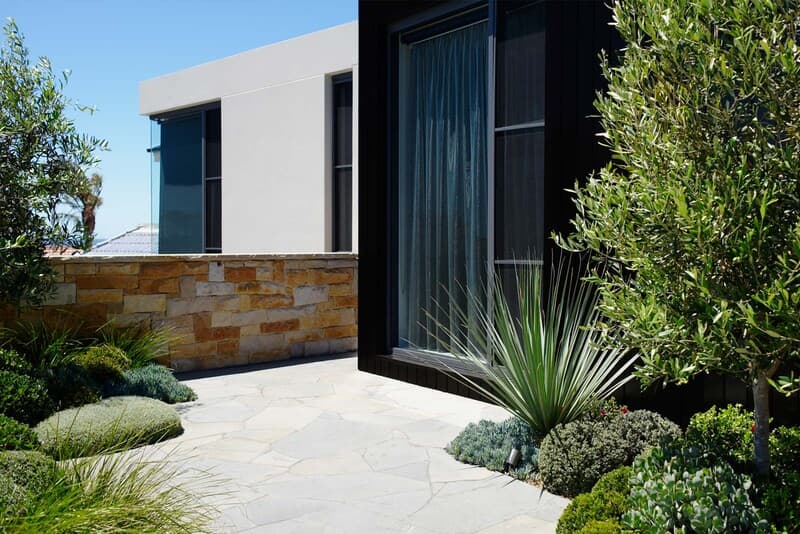
The paver that looks great in the showroom under fluorescent light may not survive a Sydney summer.
Common material mismatches:
- Light-coloured limestone in entertaining areas — stains badly with red wine, oil, and leaf tannins
- Smooth porcelain around pools — beautiful but slippery when wet, especially with sunscreen on the surface
- Untreated softwood decking — silvers and splinters within two years in Sydney UV
- Polished concrete outdoors — looks architectural for a season, then etches from rain and weathers unevenly
- Tropical species like Heliconia in cold pockets — die back over winter and never quite recover
Materials need to be specified for the location, the use, the sun exposure, and the maintenance you're willing to do. Test a sample on site for a week before committing to a full area.
Not planning for how the backyard connects to the house
A backyard is most useful when it feels like an extension of the kitchen and living areas, not a separate space you visit. The connection has to be designed.
Common connection failures:
- A 200mm step from the kitchen to the deck — turns into a trip hazard at night
- A narrow door (under 1.2m) between living and outside — kills the indoor-outdoor flow
- An entertaining area that faces away from the kitchen — guests separate from the host
- A dining table positioned where the kitchen window overlooks it from above (or worse, doesn't)
- A back door that opens straight onto a downpipe or aircon condenser
Spend time at the design stage standing in the kitchen, looking out. The outdoor layout should reward that view. Where there are level changes, resolve them with proper steps or a ramp — not a single awkward riser.
Underbuilding the entertaining area
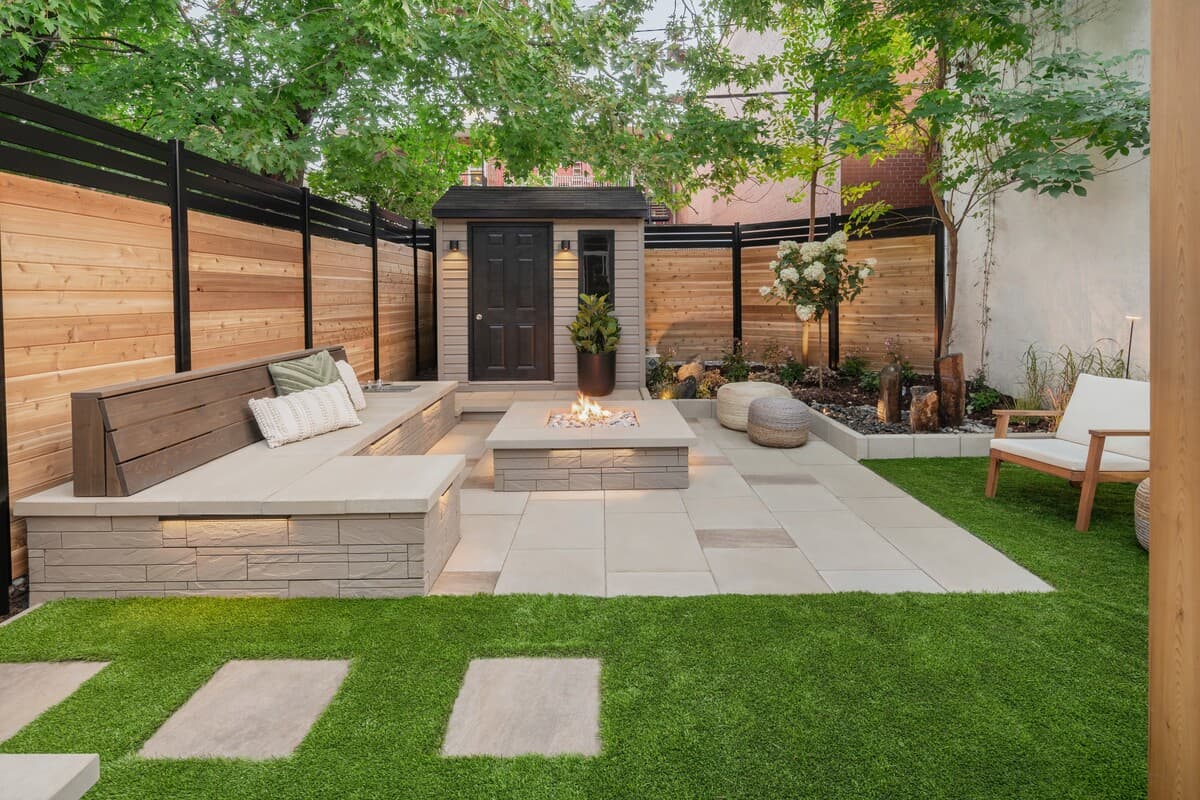
Entertaining areas are almost always built too small. We've replaced dozens of 3m × 3m concrete slabs over the years because the homeowner finally accepted the dining table doesn't fit comfortably.
Minimum dimensions for an entertaining area:
- Six-seater table: 4m × 4m clear paved area
- Eight-seater table: 4.5m × 4.5m
- Ten-seater plus lounging: 5m × 6m or larger
- L-shaped sofa with coffee table: 4m × 3m
These are minimums for the furniture alone. Add another 600mm on each side for chair pull-out and walking around. Underbuilding by even half a metre is the difference between a usable space and a cramped one.
Planting without soil preparation
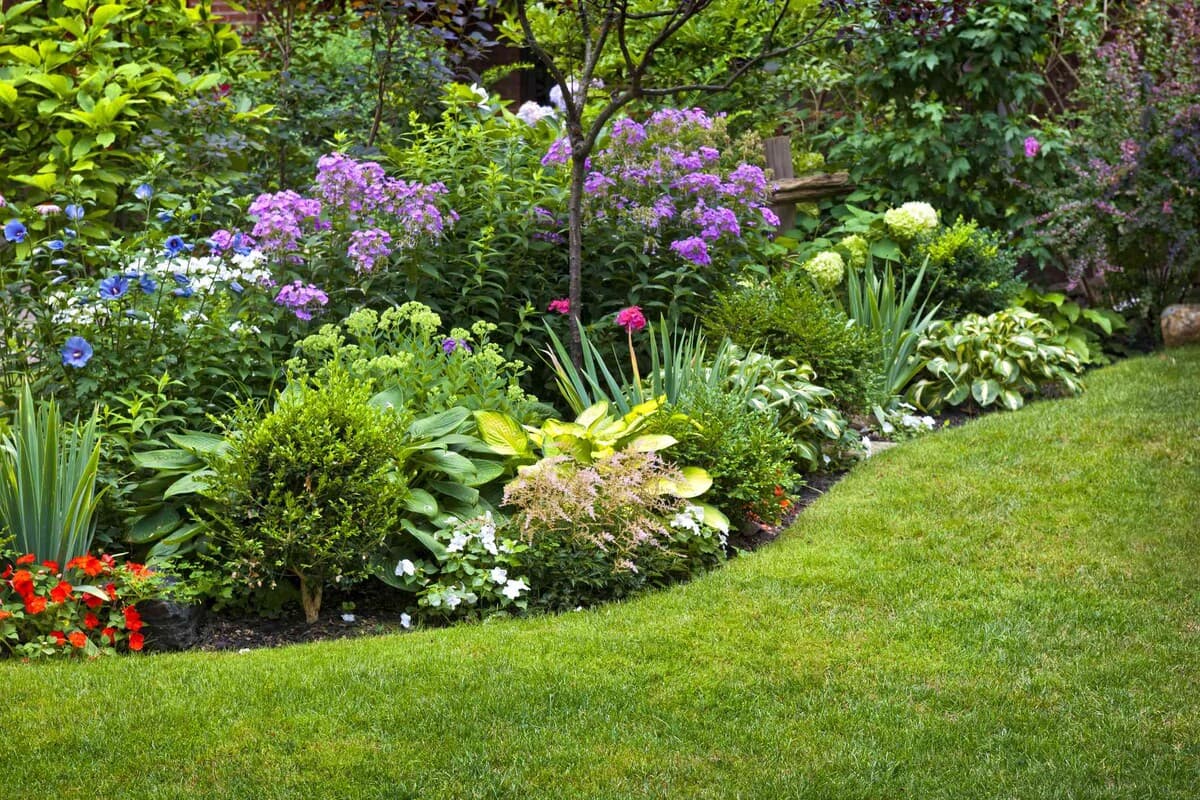
Sydney soils are not naturally great planting soils. The clay-heavy areas have poor structure. The sandy coastal areas have low organic content. The made-up soils on infill blocks can be anything from builders' rubble to pure clay fill.
Planting straight into untouched native soil is the fastest way to lose 30% of the plants in the first summer.
What proper soil preparation looks like:
- Test the soil — pH, texture, drainage, organic content
- Amend with organic matter — composted material at 100mm minimum across planting beds
- Add gypsum where clay structure needs improvement (Hills District, parts of Parramatta)
- Dig planting holes twice the width of the rootball and back-fill with amended soil
- Mulch heavily — 75mm of bark or sugarcane mulch retains moisture and reduces weed competition
Soil amendment costs a few thousand dollars on most projects. Dying planting costs the same to replace, plus the time lost.
Ignoring sun and shade analysis
The sunniest spot in the backyard in December is not the sunniest spot in June. Sydney gets sharp seasonal variation in sun angle, and a backyard that's drenched in summer sun can be in deep shade for half the winter.
Common sun planning mistakes:
- Pergola positioned where it casts shade over the lawn rather than the dining table
- Vegetable garden tucked into a corner that turns out to get four hours of sun in winter
- Pool surround facing south — cold from autumn through spring
- Outdoor kitchen positioned to cook directly into afternoon sun
- North-facing window stripped of an established tree, then turning the room into a heat trap
Spend a year (or at minimum a season) observing the existing sun and shade before locking in the layout. If you can't wait, use a sun-path app to model the angles across the year.
Choosing the wrong lawn variety — or a lawn at all
Buffalo, kikuyu, couch, and synthetic all look similar in the bag. They behave very differently in a Sydney backyard.
The wrong choices we see most often:
- Kikuyu in shaded backyards — fails within a year, then becomes a patchy mess
- Couch under big trees — never gets enough sun, gets out-competed by weeds
- Buffalo in full sun without watering — Sir Walter handles part-shade but still needs watering through summer to establish
- Synthetic turf with no drainage base — sits wet, smells of pet urine, lifts at the edges
And sometimes: a lawn at all. A 30 m² patch of struggling grass between a deck and a fence rarely looks better than the same area as garden, gravel, or paving. If the lawn isn't doing real work, it's adding maintenance for no benefit.
Cutting corners on edge restraints and base prep
Most failed paving in Sydney backyards isn't the paver — it's what's underneath and around it.
What proper paving construction needs:
- Excavation to a minimum 200mm below finished surface (300mm for vehicle areas)
- Compacted road-base in 100mm layers
- Bedding sand at 30mm
- Edge restraints — concrete haunches, steel edging, or stone kerbs — locked in along every paved edge
- Joint sand swept in and watered to settle
A patio laid on a thin layer of sand over compacted clay will start moving within a year. Pavers will rock, joints will open up, edges will subside. The fix is full removal and re-lay.
Fitting too many features into one backyard
A backyard with one strong feature reads more resolved than a backyard with a fire pit, a water feature, a pizza oven, a hot tub, a vertical garden, three pergolas, and feature lighting on every plant.
The pattern that works: pick one anchor (a pool, a fire pit zone, a feature tree, an entertaining area), spend on it properly, and resolve everything else cleanly so it supports the anchor rather than competing with it.
Forgetting about future access and maintenance
A few things that come back to bite you:
- No path to the back fence for fence repairs, painting, or replacement
- Planting in front of the air-con condenser that has to be torn out for service
- Permanent structures over stormwater pits that need access
- Built-in benches that block access to taps, gas connections, or pool equipment
- Densely planted boundaries that grow into the neighbour's yard within two years
A 600mm-wide service strip along boundaries and behind built-in elements solves most of these. So does talking to the contractor about what needs ongoing access before construction starts.
What to do instead
Most of these mistakes share a single root cause: jumping into construction before the design is properly resolved. The cheapest fix is always the one that happens at the planning stage.
Before any work starts on a Sydney backyard, the design should answer:
- How does water move across the site?
- How do people move from the kitchen to the entertaining area to the lawn?
- Where does the sun fall in summer and winter?
- What is the one feature that anchors the whole design?
- What ongoing maintenance is the household actually willing to do?
Nazscapes works through these questions during the free site visit and design conversation, before any quote is finalised. If you're planning a Sydney backyard project and want to make sure the design is resolved before construction starts, get in touch — we'll walk the site, talk through the brief, and put together a clear written scope.

Nazscapes
Ryde-based Sydney landscaping team
Nazscapes is a Sydney landscaping company delivering design-led outdoor construction for homes that need more than surface-level garden styling. Since 2002, the team has combined planting, paving, turf, retaining, pool surrounds, and site-aware detailing into landscapes built for long-term liveability.